A system that acts
An AI agent can use context and tools to take actions toward the task it is given.
FOR EXAMPLE
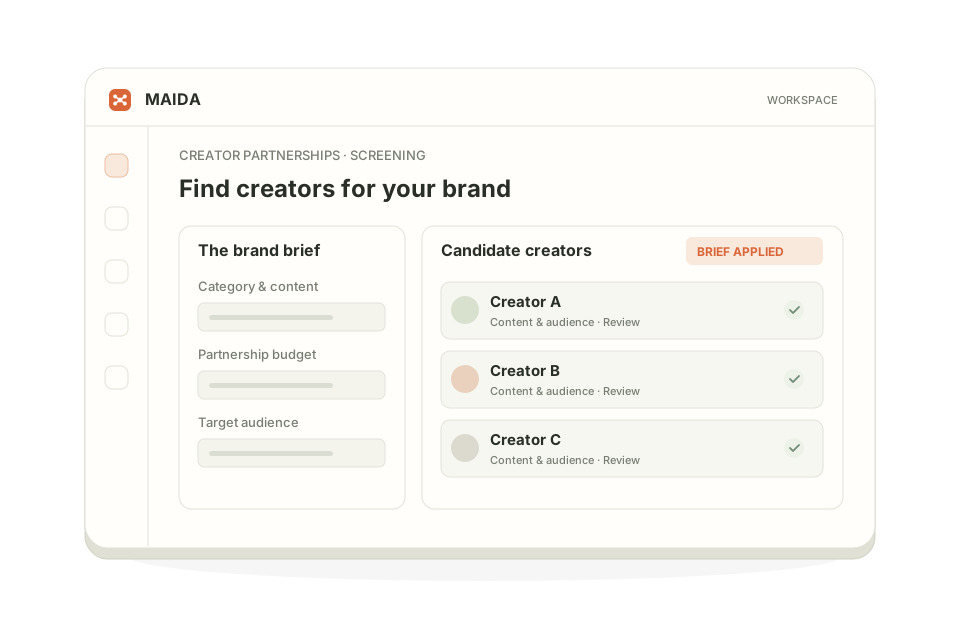
Help prepare creator candidates and screening evidence against a brand brief.
AGENTIC AI
Connect tasks, tools and people around business goals. Bring AI into commerce marketing, operations and sales, from execution to ongoing improvement.
UNDERSTANDING AGENTIC AI
AI agents and Agentic AI describe related ideas from different angles. Understanding them helps you decide how AI should fit the work.
An AI agent can use context and tools to take actions toward the task it is given.
Help prepare creator candidates and screening evidence against a brand brief.
Agentic AI emphasizes planning around a goal, using tools, taking action and adapting based on results.
Design content, partnership, execution and review around a campaign goal, with clear human decisions and feedback.
Agentic AI can involve one or more agents, combined with fixed workflows and human review. The right approach depends on the task.
HOW THE WORK MOVES
Choose a stage to see how goals, context, actions and decisions connect.
Define the goal, available resources and constraints, and agree how to evaluate the result. A concrete goal makes it easier to choose where AI can help.
For a product launch, define the audience, budget, timing and content requirements first.
An agent can use business information, available tools and the current state to plan tasks. Business requirements determine where fixed steps or dynamic decisions fit.
Turn the campaign brief into content requirements, creator criteria and decisions for each role.
Use authorized tools to retrieve information or create content, keeping task status and execution records. People and agents take over their part with the context they need.
Prepare creator candidates with supporting evidence and draft scripts for the relevant reviewer.
Set review points for spending, publishing and external communication. When information or permission is missing, hand the decision to an owner with the evidence and open questions.
The brand owner reviews creators, scripts and fees before the agreed next steps proceed.
Review the goal, execution and business results. Keep useful methods and issues to improve. With team review, update knowledge, rules and workflows for the next round.
Review content performance and partnership records, then reuse useful creator criteria and script lessons.
Bring feedback into the next plan and keep knowledge and working methods up to date.
WHAT CHANGES FOR THE TEAM
Focus on how work gets done, how information travels and whether the team can reuse what it learns.
Keep the brief, evidence, owner and result with the task, reducing repeated explanations between roles.
Pass the brand brief and screening evidence along with the creator shortlist.
Bring recurring information, rules and steps into workflows so the team spends less time preparing the same work.
Reuse brand assets, content requirements and review steps for the next production round.
Review execution and the gap between results and goals, then adjust the next plan.
Use session reviews and execution records to follow up on preparation and coordination.
Turn individual experience into shared knowledge, workflows and working methods the team can keep improving.
Help a new colleague take over using shared methods and contribute what they learn.
COMMERCE, IN PRACTICE
Follow the work across content, creators and live commerce, with clear tasks, owners and feedback.
Define audience, budget, timing and evaluation criteria

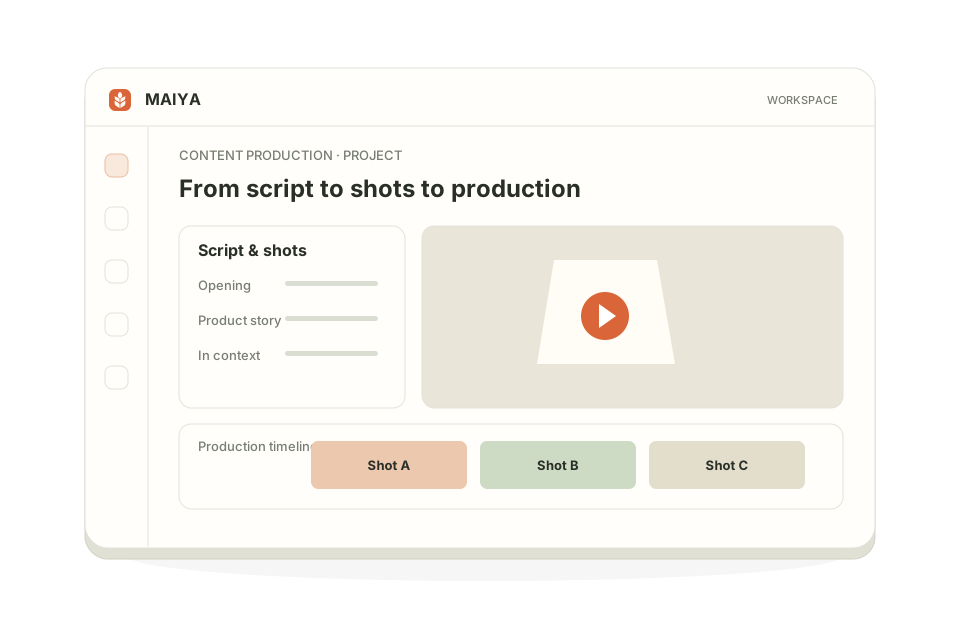
Organize brand assets and references, produce video, presenter and live-room content, then preview and approve.

Screen creators against the brief, retain decision evidence and follow outreach, projects and execution.

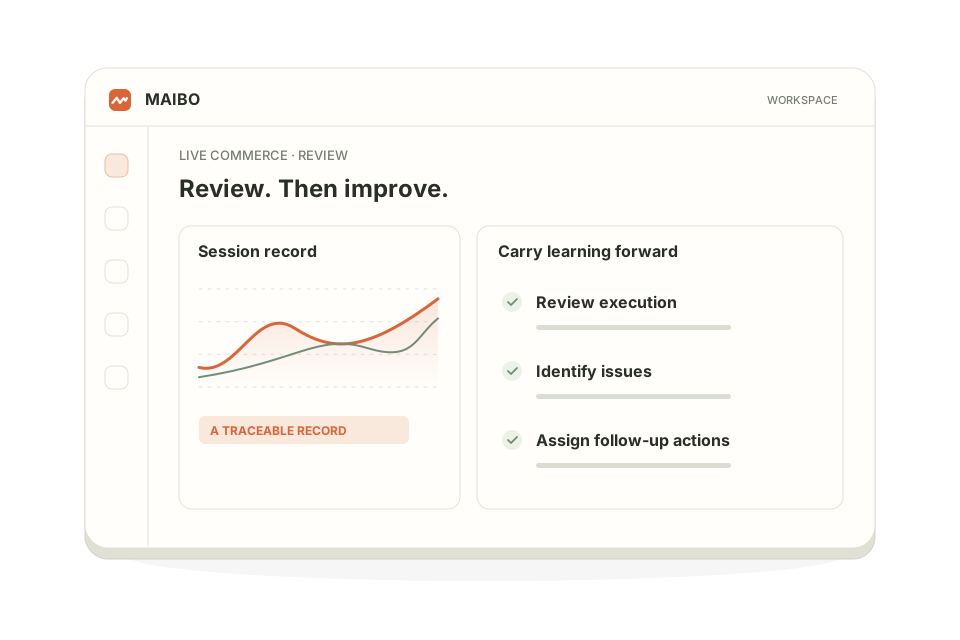
Plan projects, SOPs and schedules, monitor live operations and review session records.
Follow up on issues and update the brief, partnership criteria and next plan.
An illustrative workflow. Features, integrations and automated actions depend on enabled products, permissions and the project scope.
BUILD WITH YOUR TEAM
MaiFu combines e-commerce operations coaching and FDE engineering to map workflows, build agents and connect systems with your team, then validate and improve through real work.
Explore AI Co-building ↗ Business & team
 Engineering & delivery
Goals, workflows, ownership and business reviews
Agents, workflows, integrations and team handover
FDE work can also start with a concrete task in other areas of the business.
A FEW PRACTICAL QUESTIONS
One or more agents can perform the work. What matters is planning around goals, using tools and adapting to results. The implementation should fit the task.
We review existing systems, information, interfaces and permissions before deciding how to connect them. Work can begin with one task and expand through validation.
Review depends on business impact and permissions. Spending, publishing and external communication need clear owners. Missing information, exceptions or insufficient permission also require a handoff.
Yes. MaiFu supports enterprise AI implementation through FDE work on agents, workflows and integrations. E-commerce operations coaching focuses on business improvement for brand and commerce teams.
LET’S TALK
Tell us about your team, existing systems and the work you want to improve. We’ll find a starting point together.